





Crisis, Spin or Structural Reform? Gauteng’s SOPA Sets the Stage for an Election-Year Showdown

Tasha Siziba
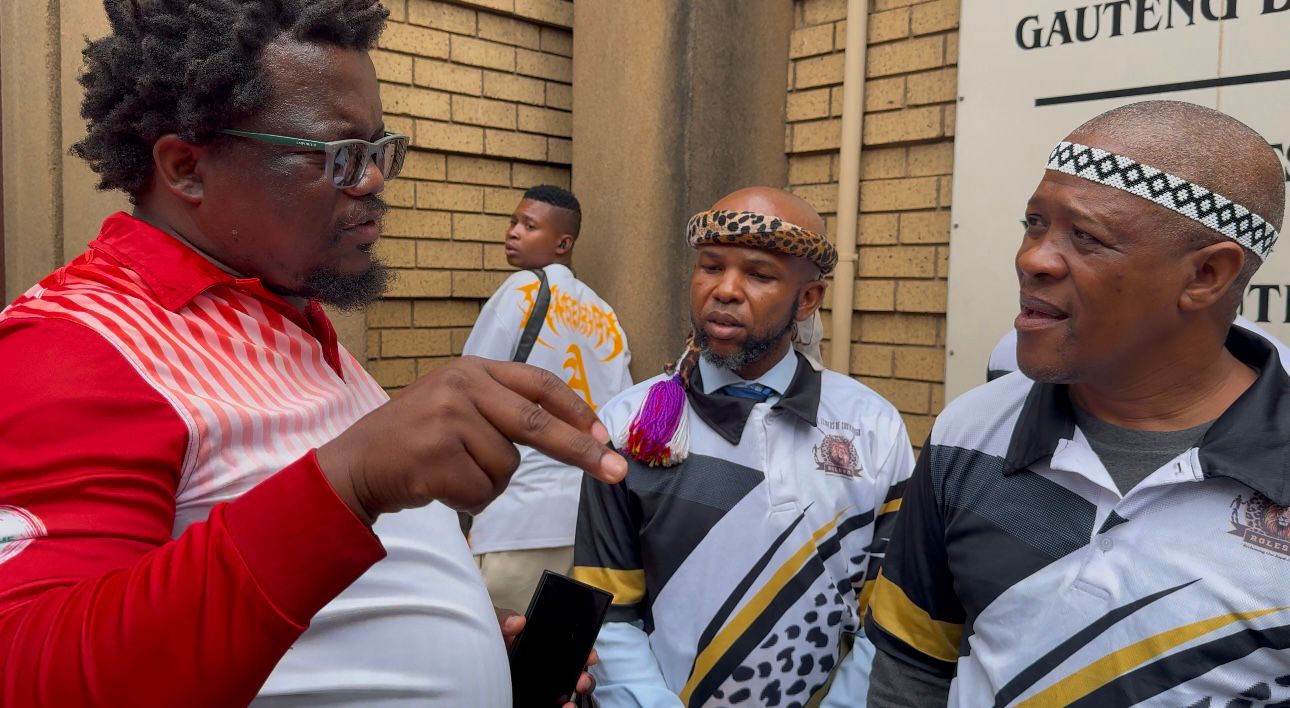
The 2026 State of the Province Address by Panyaza Lesufi was never going to be a quiet affair. Delivered at NASREC in Johannesburg, the speech was framed as a report-back on “bold commitments” made in 2025, with the Premier openly apologizing for shortcomings while insisting government is correcting course.
But if Lesufi’s tone was reflective, the opposition’s response was anything but.
What unfolded after SOPA was not merely political theatre — it was a battle over credibility, competence and who can best claim the mantle of “delivery”.
Lesufi’s Case: Progress Amid Pressure
The Premier’s speech followed a clear structure: acknowledge crisis, present numbers, project recovery.
On water, Lesufi was unequivocal — the issue is infrastructure failure, not supply. He detailed emergency responses to the Rand Water explosion, new reservoirs, a R760 million infrastructure upgrade in Johannesburg and long-term expansion linked to the Lesotho Highlands Water Project .
On jobs and investment, the Premier leaned heavily on big figures:
• R27 billion in FDI
• R312 billion pledged at the Gauteng Investment Conference
• Major projects including Microsoft’s data centre expansion and Heineken’s Midvaal investment .
Crime statistics were cited as trending downward, with murders reportedly decreasing year-on-year .
Infrastructure backlogs?
26,000 potholes repaired.
4,786 traffic lights functional, with 699 still to go .
In tone, Lesufi sought to project a government under pressure but in motion — apologetic, yes, but active.
The underlying message: Gauteng is not collapsing; it is correcting.
The DA’s Counter: Apologies Without Accountability
The Democratic Alliance was blunt: apologies mean nothing without measurable change.
Their critique was surgical:
• If infrastructure can be fixed quickly for global summits, why not for residents?
• If water failures are due to maintenance, why was maintenance neglected?
• If local government is broken, why has intervention been delayed?
The DA framed Lesufi’s speech as repetition — recycled promises about reservoirs, digitised health systems, online school registrations and CBD revitalisation.
They also weaponised one of the Premier’s own acknowledgements: that DA-led Midvaal is the province’s best-performing municipality. For the DA, that line became proof of concept — governance works where political will exists.
The DA’s broader argument: Gauteng does not suffer from lack of plans. It suffers from lack of execution.

The ACDP’s Moral Punch: Pay Your Bills First
The African Christian Democratic Party took a different angle — fiscal ethics.
Why host SOPA at NASREC?
Why hire an orchestra?
Why book two halls?
All while:
• Ekurhuleni threatens to disconnect power to 189 schools over R123 million owed.
• Scholar transporters report unpaid invoices.
• Municipal health costs strain local budgets.
Their argument was less about ideology and more about optics: government cannot preach austerity to residents while staging expensive events.
The subtext: symbolism matters when people are struggling.
ActionSA’s Intervention: From Crisis Governance to Discipline
ActionSA positioned itself as the technocratic alternative.
Their critique was philosophical rather than emotional:
Why are we repeatedly fixing crises that should have been prevented?
They argued:
• Maintenance budgets should be ring-fenced.
• Asset management must replace emergency “war rooms”.
• Law enforcement must produce convictions, not press conferences.
• Corruption loopholes must be structurally closed.
By referencing Herman Mashaba’s tenure in Johannesburg as mayor— including pipe replacement and anti-corruption arrests — ActionSA attempted to contrast “steady governance” with “reactive politics”.
Their frame: Gauteng doesn’t need more announcements. It needs systems.
The Real Divide: Narrative vs Trust
Strip away party colours and three competing narratives emerge:
Lesufi’s narrative:
We are fixing what we inherited and what has broken under pressure.
DA’s narrative:
You’ve had the power for years. This is not inheritance — this is incumbency.
ACDP’s narrative:
Government must demonstrate moral credibility before demanding public patience.
ActionSA’s narrative:
This is not a resource problem. It is a discipline problem.
The uncomfortable truth? Each contains elements of reality.
Gauteng is both:
• The economic engine of South Africa.
• A province visibly strained by infrastructure decay, migration pressure, crime and coalition instability.
The question voters will weigh in 2026 is not whether government is doing something. It is whether it is doing enough, fast enough — and whether trust can be restored.
My Take: The Politics of Prevention
Lesufi’s speech was detailed and ambitious. It showed a Premier who understands the scale of Gauteng’s crises and is willing to own some failures publicly.
But the opposition’s core critique lands sharply: many of these crises — water leaks, potholes, cable theft, municipal instability — are symptoms of years of preventative maintenance and governance gaps.
In election season, numbers compete with lived experience.
If residents still sit without water at night, dodge potholes on the way to work, or wait months for services, billion-rand investment pledges will struggle to resonate.
The 2026 SOPA was not a disaster for the Premier. It was competent, data-heavy and forward-looking.
But politically, it has set up a stark referendum:
Will Gauteng reward apologies paired with incremental correction?
Or will it demand a new governing philosophy altogether?
One thing is certain: this election will not be fought on promises alone.