






THE DAY AFTER THE MARCHES: When the Placards Come Down, Can South Africa Face the Truth About Immigration?
Tasha Siziba
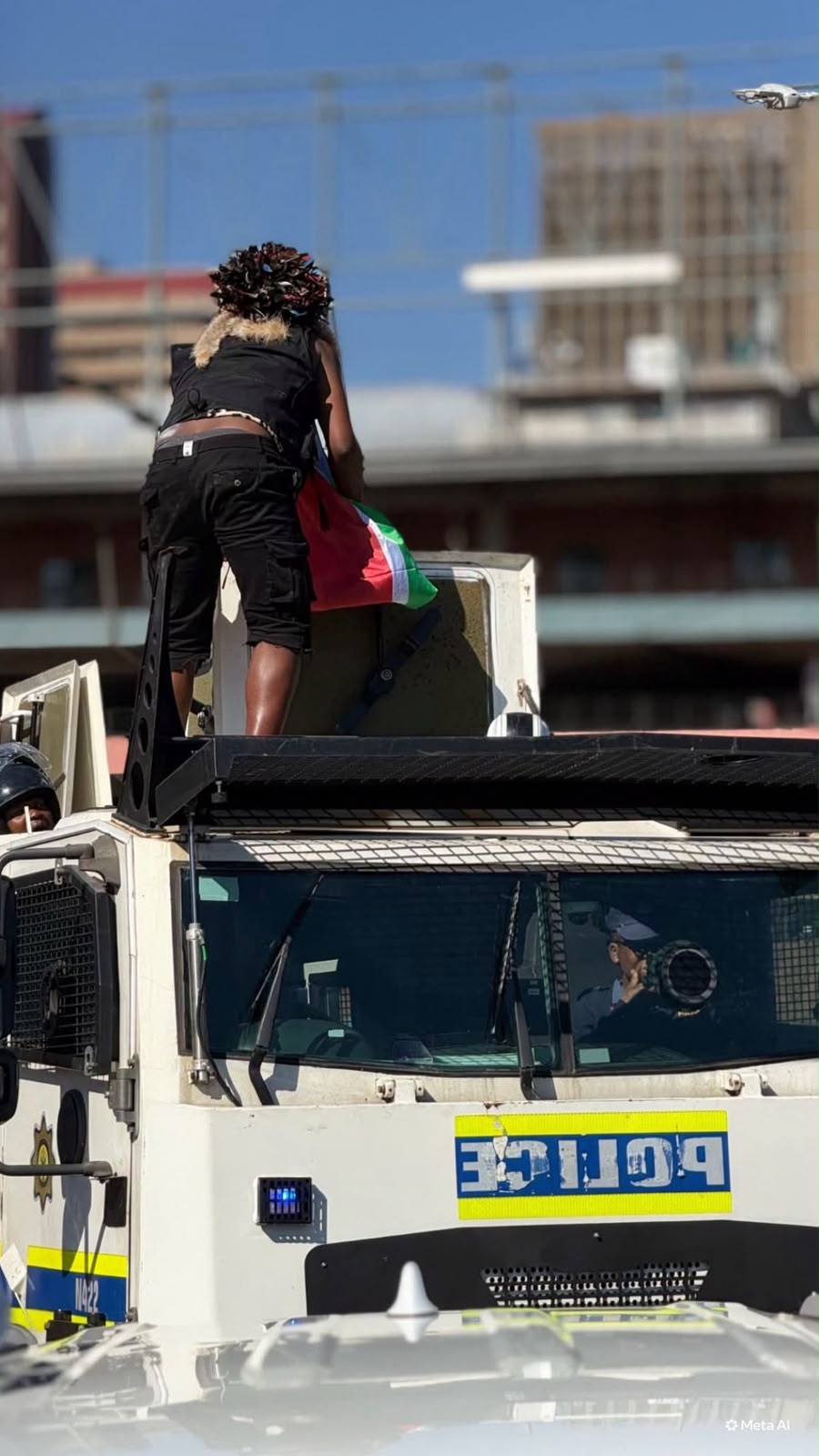
The chants have faded. The streets are quiet once again. Police vehicles have returned to their stations, and the banners demanding that undocumented migrants leave South Africa have been folded away.
But beneath the calm lies a nation still searching for answers.
On June 30, thousands of South Africans took to the streets in one of the country’s most coordinated demonstrations against undocumented immigration. Organised by community groups and civic organisations, including March on March, protesters marched through cities and townships, demanding tighter border controls, stricter enforcement of immigration laws and the removal of undocumented migrants.
The demonstrations unfolded under heavy police presence, with authorities determined to prevent violence. While most marches remained peaceful, isolated incidents of unrest and looting were reported in Klopperpark, east of Johannesburg, where police and security teams moved swiftly to restore order.
On the eve of the demonstrations, President Cyril Ramaphosa met protest leaders in an effort to lower tensions.
His message was clear: South Africans have every right to protest—but not to intimidate, threaten or take the law into their own hands.
Government, he reminded the country, remains the only authority responsible for enforcing immigration laws.
Yet as the country wakes up after one of the most significant anti-immigration protests in recent years, the bigger question remains unanswered.
What happens now?
A Nation Looking for Someone to Blame
South Africa is hurting.
With millions unemployed, public services under pressure, crime dominating headlines and the cost of living climbing steadily, frustration has reached boiling point.
For many communities, undocumented immigration has become the visible symbol of everything that appears broken.
Foreign-owned spaza shops become easy targets.
Street traders become convenient scapegoats.
Accent and nationality become reasons for suspicion.
But are immigrants truly responsible for South Africa’s crises—or have they become the face of deeper failures that the government has struggled to address?
The Crime Narrative: Does the Evidence Support It?
Perhaps no accusation is repeated more often than the claim that immigrants are responsible for rising crime.
It is a narrative that spreads quickly on social media and in communities frustrated by violent crime.
Yet official statistics tell a far more complicated story.
There is no conclusive evidence that foreign nationals commit more crime than South African citizens.
Both South Africans and non-citizens can be victims and perpetrators of criminal activity.
Data from the Department of Correctional Services also reveals that approximately 65% of foreign nationals in prison are detained for immigration-related offences rather than violent crimes. Undocumented immigrants account for only around 2% of South Africa’s total prison population.
The numbers challenge one of the country’s most persistent assumptions.
Who Is Taking Whose Jobs?
Walk through almost any township or informal settlement, and the complaint is familiar.
“They’re taking our jobs.”
But economists argue that the issue is far more complex.
Many migrants work in sectors where South Africans are either unavailable or unwilling to work under existing conditions. Others survive through informal trading, entrepreneurship and small businesses that often employ local residents.
The bigger problem remains South Africa’s stagnant economy.
Without meaningful economic growth, job creation and investment, competition for limited opportunities will continue to fuel resentment—regardless of who occupies them.
Are Public Services Being Overwhelmed?
Another widespread belief is that migrants are placing unbearable pressure on schools, clinics and hospitals.
Again, the evidence tells a different story.
The Department of Basic Education has publicly rejected claims that foreign learners are overwhelming South African schools.
Official figures show that only 1.8% of learners enrolled in public schools are foreign nationals.
Hospitals and clinics undoubtedly face enormous pressure—but health experts point to chronic underfunding, population growth, poor infrastructure and governance failures as the primary causes.
Immigration forms only one part of a much larger picture.
Migration Is Older Than South Africa’s Democracy
Migration into South Africa did not begin yesterday.
Long before democracy, workers crossed borders from neighbouring countries to work in mines, farms and industries that relied heavily on regional labour.
Today, people continue to move because of conflict, economic collapse, political instability, climate change and the simple hope of building a better future.
South Africa remains one of Africa’s largest economies, making it a natural destination for those seeking opportunity.
So Why Don’t They Come Legally?
It sounds like a straightforward solution.
“Just enter legally.”
In reality, legal migration is often anything but simple.
Visa systems are slow.
Documentation can take months or years.
Refugees fleeing violence frequently arrive without paperwork.
Administrative backlogs and limited legal migration pathways have created a system that many believe no longer reflects the realities of migration across Southern Africa.
That does not excuse illegal entry.
But it explains why the issue cannot be solved simply by demanding that undocumented migrants leave.
Beyond the Protest Politics
The June 30 marches have succeeded in one important respect.
They forced the government to confront an issue many South Africans believe has been ignored for too long.
Communities want secure borders.
Businesses want legal certainty.
Citizens want jobs.
Migrants want dignity and lawful processes.
These are not mutually exclusive demands.
What remains dangerous, however, is when anger replaces evidence.
When rumours become accepted as fact.
When frustration turns neighbours into enemies.
South Africa’s immigration debate deserves facts—not fear.
The Investigation That Still Needs to Happen
Perhaps the country has been asking the wrong questions.
Instead of asking only whether immigrants are responsible for unemployment, crime or failing services, perhaps we should also be asking:
Why are immigration systems failing?
Why do corruption syndicates continue to sell fraudulent permits?
Why are border controls repeatedly compromised?
Why has economic growth failed to create enough jobs for citizens and legal migrants alike?
And why has government struggled for years to implement an immigration policy that is both humane and effective?
Until those questions are answered, every protest risks becoming another headline without a lasting solution.
The Verdict
The marches are over.
The slogans have been heard.
But South Africa’s immigration challenge did not begin on June 30, and it will not end there.
The country’s future will not be determined by how loudly people marched.
It will be determined by whether South Africa can confront uncomfortable truths, reject misinformation and develop policies that protect its borders while preserving its constitutional values.
Because when the placards disappear, the real work begins.