






Oppenheimer Memorial Trust Frontier Research Awards Ceremony 2026
Thabo Motlhabi
The Oppenheimer Memorial Trust has established itself as a leading institution in recognizing excellence in research, and innovation. Through initiatives such as the New Frontier Research Awards, the Trust celebrates talented and enthusiastic researchers who are committed to making new discoveries and advancing knowledge.
The 2026 awards ceremony was held at Circa Gallery in Rosebank, on Wednesday, 27th May 2026, bringing together researchers, academics, and distinguished guests to celebrate outstanding achievements in scientific research.
South Africa is renowned for its rich biodiversity, natural resources, and cultural diversity, and indigenous plants are among the country’s valuable natural assets in fungi, a plant species that has attracted significant research interest due to its ecological and scientific importance.
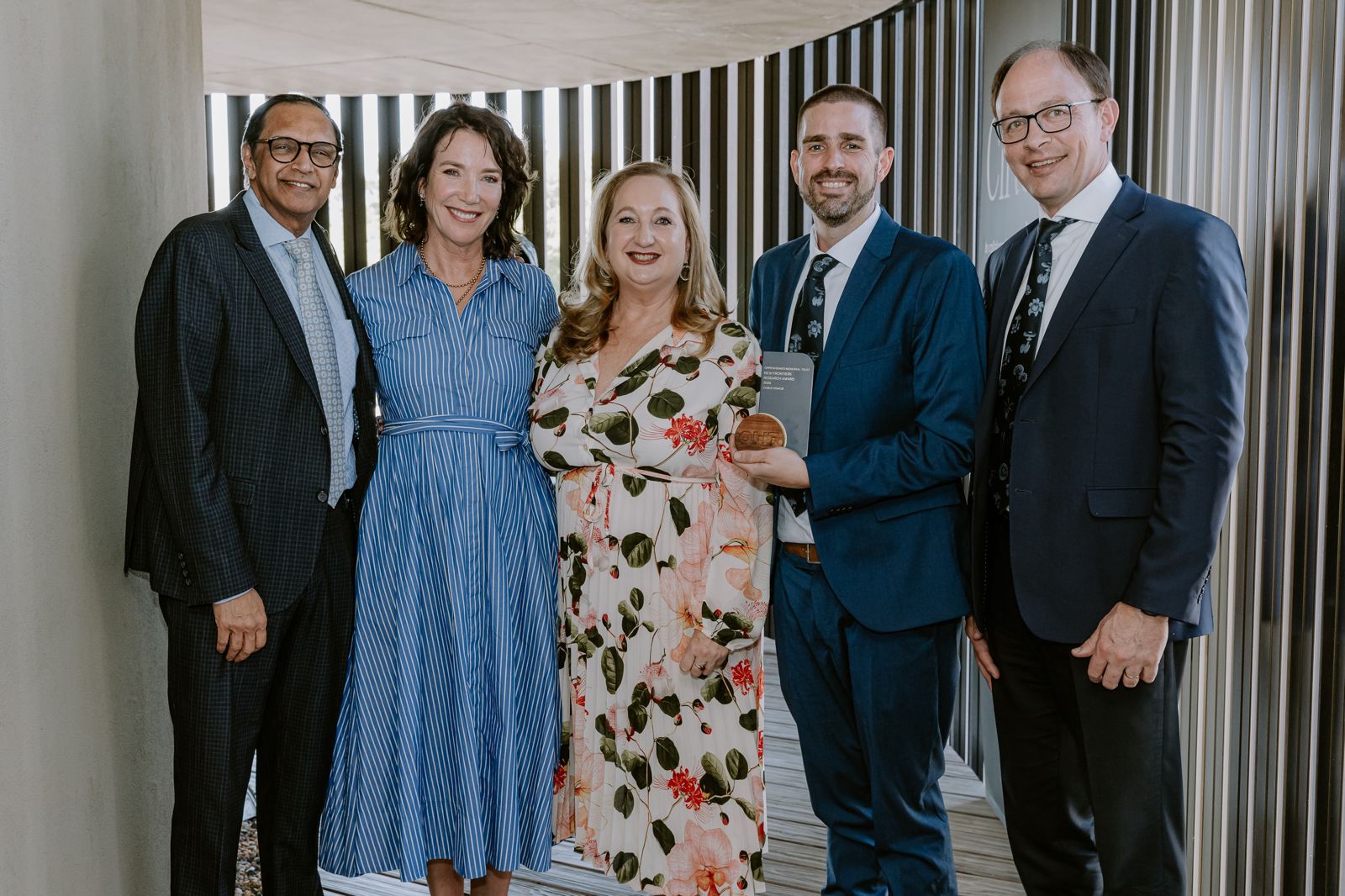
The main objective of the award ceremony was to recognize a groundbreaking research, and discoveries by Associate Professor Cobus Visagies. His award-winning Mufasa Project aims to map and study the distribution of indigenous plants to achieve a deeper understanding of the country’s natural heritage and biodiversity.
The Oppenheimer Memorial Trust continue to play a unique role in supporting researchers by providing funding opportunities that enable them to pursue innovative projects, and explore uncover hidden natural resources, and encouraging the use of modern technologies, and data- driven approach to benefit not only South Africa, but the entire global scientific community.
Speaking during the ceremony, Associate Professor Cobus Visagies, who is part of the Faculty of Forestry and Agricultural Biodiversity Institute at the University of Pretoria, shared his thoughts.
” This award means the world to me, if I think about the funding that goes t9 the basic research, that it’s a struggle to find to get the type of funding to funds the type of project that we proposed which is a pity because, I really believe that Mufasa mapping out fungi across South Africa is of great value not in the here, and now,, so so much but in the foundations that we are going to build way to the future, building the culture collections, all of the data including all genre to better understand this fungi that research can use in the future to understand fungi ,and potential use to the benefits of human-kind . To the Youth, this is my dream project, and it’s a project that I started thinking about many years ago, and I applied through many groomd funding agencies, including when Oppenheimer first launched the New Frontier Research Awards, and I was invited for the interview in 2024, and for finally, I eventually got into 2026, ideas around the project adding words of encouragement to them, never give on your dreams, and always believe that this is important for South Africa”.
The ceremony was attended by distinguished audiences for supporting researchers, and stakeholders who gathered to celebrate associates Professor Cobus’s achievements. His Mufasa Project is expected to benefit communities, schools, and future generations to pursue careers in science and research.

CEO of Oppenheimer Memorial Trust, Mrs Tracey Webster emphasised the significance of recognising Professor Cobus Visagie’s work and its broader impact on South Africa’s natural heritage:
“I think the importance of giving this award to Professor Cobus Visagies for discovering fungi is that the Mufasa Project that he recommended is a natural biodiversity that we have in South Africa, and so that is our natural heritage, and I think what he has done is say how we use the same natural heritage we have in South Africa to build exceptional and extraordinary science that comes from South Africa to contribute to the world at large, and what is really interesting is what he has done around fungi, and fungi are very undiscovered in South Africa, but we are led to believe that we are one of the most diversified fungi in South Africa. And of you remember many, majy years ago, fungi was discovered, we were able to discover create other antibiotics that are today are life saving drug, and for many years, and all of us know whenever we get sick or desperately ill, we turn to antibiotics to get better, and that is one species of fungi. I also think what really exciting about this project is that associate Professor Cobus is going to be working with schools across South Africa, and encouraging young people to go, and get samples of soil from their communities, he’s going to diagnose the soil to see if they’re could get fungi living in it, if they’re, a new spices of fungi would be discovered, and they would be named after that student whose soil fungi was discovered. I think often for young people alongside want somebody that is scientist, and they listen to them,and telling them they’re stories, suddenly science becomes alive to that young person. I’m hoping the professor is going to inspire many young people.”
As the ceremony drew to a close, guests listened to inspiring speeches celebrating scientific excellence and the importance of investing in research. The highlight of the afternoon came when Associate Professor Cobus Visagies received his well-deserved New Frontier Research Award for his Mufasa Project. In his acceptance remarks, he thanked the Oppenheimer Memorial Trust for believing in his vision and supporting his research journey.
The event marked another important milestone in the Trust’s commitment to advancing scientific discoveries and empowering researchers whose work has the potential to create lasting benefits for South Africa and the world.