






Why are Boys in the School Toilet?
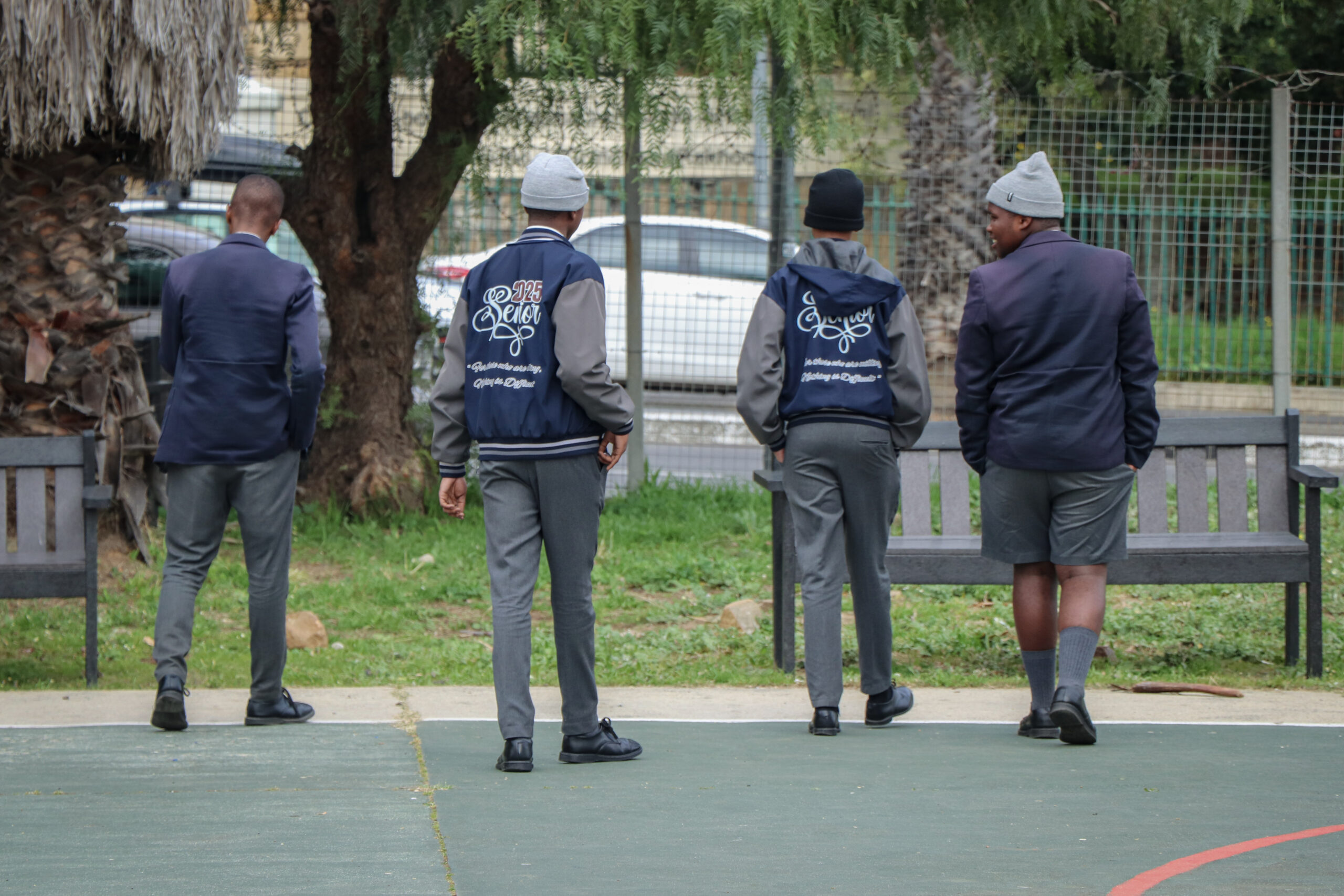
Skhumbuzo Moodaley-Mpisane and Siyabulela Sandi
In South African high schools, it’s not uncommon to find a cluster of boys smoking outside the toilets. Their presence is menacing—frightening, even—for those boys who mistakenly wander into the “wrong” toilet and are met with ridicule at best, a beating at worst.
This pattern of disengagement raises an obvious sociological question: Why do some boys choose the toilet block instead of the classroom?
We know that roughly four in 10 children in South Africa who start school in Grade 1 do not finish matric. Boys drop out at a higher rate than girls. This is reflected in data that shows that since 2023, over 260,000 more girls than boys wrote their matric exams. The most cited reasons for leaving school include bullying, financial hardship, academic struggle, peer pressure, gang involvement, and substance abuse—all disproportionately affecting boys.
The dropout rate can be misinterpreted as evidence of laziness or lack of discipline. However, they should be read differently—a schooling system that is not meeting learners where they are relative to their social, emotional, and developmental needs.
This matters at two critical moments: in early childhood, when socio-emotional skills—the ability to regulate emotions, manage stress, and build healthy relationships—are forming; and in adolescence, when teenagers are actively constructing their sense of self and identity.
When boys haven’t developed socio-emotional skills, both their engagement and academic performance suffer. The problem is not that they cannot learn. It is that they were never given the support needed to build those skills. South African research bears this out: socio-emotional skills at school entry are positively linked to school performance in literacy and math in primary school. However, in preschool, boys are already behind girls in reaching developmental milestones, including emotional readiness for school—which would help to build positive relationships, adapt to new environments, and manage emotions.
Boys who arrive at school without these socio-emotional foundations are often met by a system ill-equipped to meet their needs, leading these boys to feel unwelcome, misunderstood, and unwanted. When institutions feel confusing, unsafe, or indifferent, young people find their own corners of comfort. Sometimes those corners are streets and gangs. And sometimes, they are school toilets — a symbol of disengagement.
Harmful gender norms and identity
The teenage brain is still growing, especially the parts that help with making decisions, controlling impulses, and handling emotions. Identity formation is the process through which teenagers form a sense of who they are and where they fit into the world. It is shaped by personal values and beliefs; cultural and social identity; gender and sexuality; goals, interests, and dreams; what they care about; and how they see themselves.
Even before boys enter a classroom, they are influenced by gender norms that shape their sense of self and how they should act. They are exposed to cultural and social messages that reward toughness and discourage vulnerability.
In many households, particularly those under economic strain and without a present father, these messages carry immense pressure. A boy’s value becomes closely tied to his perceived ability to support and protect his family. Parents often mean well, but statements made in passing—”you are the man of the house”—place adult burdens on children.
In addition, deeply embedded ideologies, such as indoda ayikhali (men don’t cry), can shape identity formation. A study involving Northern Sotho young men showed that they prized masculine values to such an extent that failure to meet expectations of masculinity would result in gender role conflict and, consequently, mental health challenges.
The pressure on young boys to support their families coupled with an inability to emotionally regulate and express themselves is a recipe for disengagement—from healthy social relationships and school.
What disengaged boys need
It’s critical that boys be supported to develop positive masculine identities and form healthy relationships with their peers and adults. Boys struggling to find their place in school need a system that sees them fully, not only as learners to be disciplined but also as evolving identities.
When boys are pushed out of school, it is not merely an educational failure; it is a societal one.
Dropping out is not the cause of the problem; it is a symptom. As a society, we need to rethink how we teach and care for and how we raise the next generation.
If we get this right, maybe fewer boys will find refuge in a school toilet, and more will feel that the classroom, and society, has a place for them.

