






Gauteng govt intensifies war on drugs
In response to the growing problem of drug abuse in the country , the Gauteng Provincial government launched a significant new campaign aimed at raising awareness against drug abuse.
The programme held on Tuesday, October 27, under the theme “Tswa Daar,” highlight the vital role that young people play in building a progressive and drug-free society.
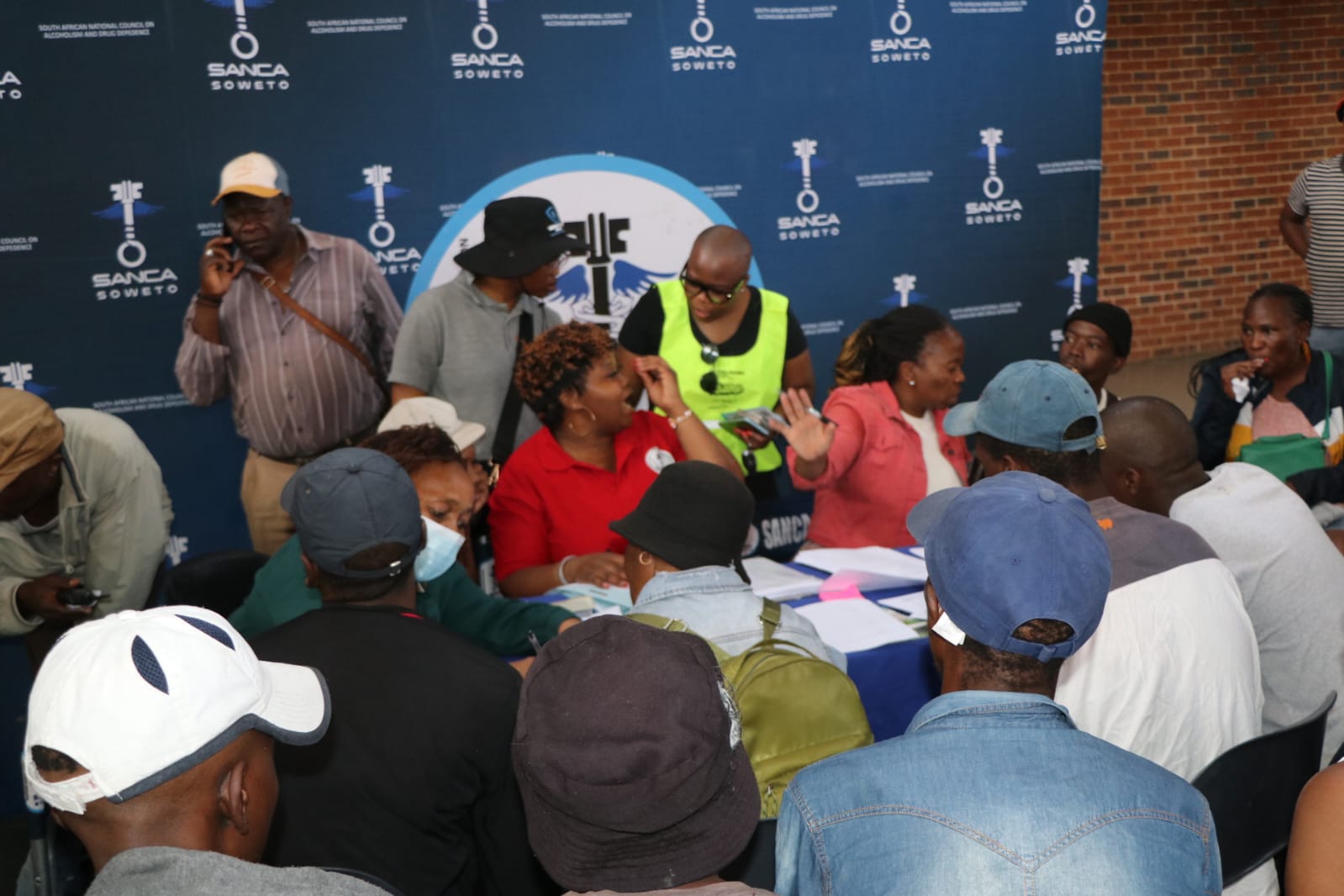
More than 600 individuals battling addiction had voluntarily agreed to be screened and were being sent to rehabilitation centres as the campaign kicked off in seven different venues in Johannesburg.
Speaking on behalf of the Provincial government, the director of substance abuse at Social development, Khomo Kgomoeswane, expressed concern over the growing issue of drug addiction in the province, particularly among the younger generation. She emphasized that substance abuse not only affects the individual but also has far-reaching consequences for families and the broader community. Stressing the need for early education and community involvement, she noted that addressing substance abuse is a collective responsibility.
Kgomoeswane added that Crystal Meth has surpassed Nyaope as the most used drug in the province.
The program included informative sessions, as well as details on counseling resources available in the region for those struggling with addiction. A large number of government officials, community leaders, health workers, church leaders, and community members attended the event, showing strong community support for the cause.
Thando Mogobatha,23, is one among thousands of people addicted to Crystal meth in a disputed Mofolo township where a growing epidemic of drug addiction is consuming young lives.
Thando revealed that his addiction has destroyed his future after he was lured into drugs by a friend.
“I couldn’t finish school because of this drugs. But i hope my life, will one day change,” he said.
A range of services were immediately available on-site, including medical assessments, applications for rehabilitation admission, outpatient treatment, and profiling for job and training opportunities aimed at assisting young people.
Parents and family members praised the initiative, calling it a timely and necessary step in protecting communities. “The presence of government officials speaking directly to us helped a lot because we have hope that one day our problems will be resolved,” one parent commented.