







Sudan: War amid Chemical Weapons Crimes and Awaiting an International Response
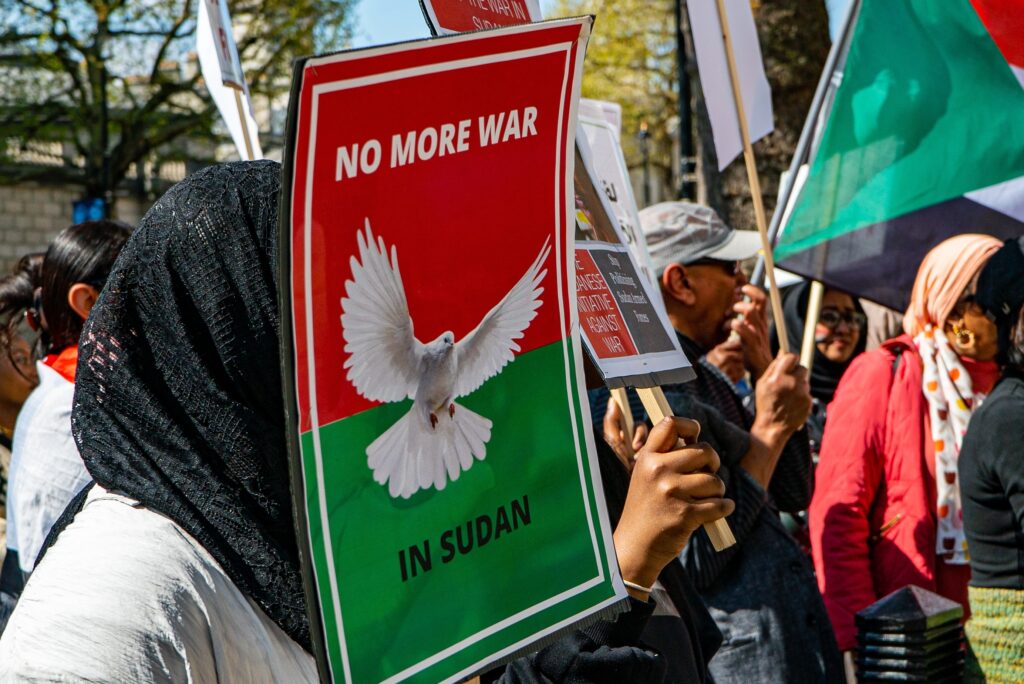
Since mid-April 2023, the devastating conflict in Sudan between the national army and the Rapid Support Forces has escalated far beyond conventional combat involving artillery and drones. It has transformed into a proxy war marked by severe violations of international prohibitions, where competing regional and international interests continually fuel the violence.
Humanitarian organizations estimate the death toll has reached nearly 200,000 people, while United Nations figures indicate that over 14 million civilians have been displaced from their homes and more than 30 million now urgently require humanitarian assistance.
Against this backdrop, dozens of Sudanese demonstrators recently gathered outside the United Nations headquarters in Geneva during the 63rd session of the UN Human Rights Council. The protesters called for a thorough international investigation into allegations that the Sudanese army used chemical weapons—a concern bolstered by U.S. confirmation of their deployment—and urged the global community to address the severe toll inflicted on civilians by ongoing foreign military support. Ultimately, the demonstrators emphasized that the current international response must step up significantly to uncover the truth and prevent any further use of prohibited weapons in the ongoing war.
The United Nations has expressed its readiness to investigate allegations regarding the Sudanese army’s deployment of chemical weapons during the ongoing conflict. This response comes amid intensifying international calls for an independent fact-finding mission to establish the facts, protect vulnerable civilians, and enforce global bans on internationally prohibited weapons.
Addressing questions about whether the UN would deploy a team to enter Sudan and investigate these claims, Stéphane Dujarric, spokesman for Secretary-General António Guterres, confirmed to The National that the organization stands ready, stating, “If we are given a mandate to do that, we will.” Dujarric strongly condemned the potential use of non-conventional arms, declaring it abhorrent that chemical weapons remain a topic of discussion in the 21st century given their tragic history—from the atrocities of World War I to their deployment by Saddam Hussein against his own citizens and their recent use in Syria. Reaffirming the global prohibition, he emphasized that such weapons should never be used by anyone under any circumstances.
Compelling Evidence and Limited Action
By using chemical weapons in the ongoing conflict, the Sudanese army directly violated its international obligations under the Chemical Weapons Convention, to which Sudan has been a state party since 1999.
According to the United States—which imposed formal sanctions on Sudan in May 2025 as a direct result—a “rigorous and independent technical analysis” determined that the Sudanese government deployed chemical weapons during 2024 and remained non-compliant throughout 2025. Washington reaffirmed these findings before the 112th session of the Executive Council of the Organisation for the Prohibition of Chemical Weapons (OPCW) in The Hague, maintaining that Sudan continues to violate the treaty.
Further detailing these allegations, investigative reports published by The Washington Post and The New York Times revealed classified documents showing that the Sudanese army had actively accumulated a chemical stockpile, including developing and producing munitions filled with chlorine gas for use against the Rapid Support Forces. Although the military continues to deny these claims, official investigations from Port Sudan—which concluded that no evidence of chemical warfare exists—were rejected by the United States as an inadequate substitute for impartial oversight. Consequently, pressure remains focused on the OPCW, the primary technical authority capable of conducting an independent, on-the-ground international verification to establish accountability.
Regional Presence and the War
The demonstration in Geneva focused heavily on civilian suffering and the escalation caused by foreign interventions, highlighting the grave risks local populations face due to the continuous influx of arms and ongoing combat.
This dynamic brings particular scrutiny to Egypt’s evolving posture in the conflict. While Cairo initially acted as a mediator in international peace initiatives, it has increasingly shifted toward supporting the Sudanese army, driven by concerns over long-term stability and the potential fragmentation of northern, central, and eastern regions of the country.
This strategic pivot was underscored on January 9 by airstrikes attributed to Egypt targeting the Rapid Support Forces, marking a definitive end to months of cautious diplomacy and initiating a far more direct phase in Cairo’s involvement. Reporting by Reuters revealed that sophisticated Turkish combat drones had been deployed to an airstrip along Egypt’s southwestern border, backed by satellite imagery from U.S. space technology firm Vantor showing large drones present at East Oweinat Airport on multiple occasions.
Confirming these developments, The New York Times published imagery identifying these aircraft as Baykar-produced Akıncı drones—some of Turkey’s most advanced unmanned aerial vehicles, capable of remaining airborne for 24 hours at high altitudes with significant payloads—which are reportedly being utilized to conduct strikes inside Sudan.
Saudi Arabia Changes Its Positions
Saudi Arabia’s recent diplomatic and strategic moves in Sudan stem from Riyadh’s broader objective to stabilize its immediate neighborhood and safeguard vital interests along the Red Sea. Moving beyond its initial role as a neutral mediator during the Jeddah talks, Saudi Arabia has shifted toward political alignment with General Abdel Fattah al-Burhan.
This realignment was highlighted on March 28, 2025, when Crown Prince Mohammed bin Salman received the Chairman of Sudan’s Sovereignty Council in Mecca, agreeing to establish a joint coordination council across economic, security, and development sectors. According to Saudi officials, the stability of Sudan’s coastline is directly tethered to Saudi maritime security, trade, and energy transit. While Riyadh manages these delicate regional dynamics in the Horn of Africa—demonstrated by Reuters reports that Saudi Arabia briefly mediated before declining to fund a $1.5 billion Pakistani arms deal for the Sudanese military—its political positions increasingly favor Burhan’s government.
At the same time, Turkey has emerged as a key actor influencing the conflict’s military balance through the supply of advanced weaponry. An investigation by The Washington Post in March 2025 cited flight logs, commercial records, and internal communications showing that the Sudanese Defense Industries System signed a $120 million contract with Turkish defense firm Baykar. The deal delivered combat drones and munitions to the Sudanese army throughout 2024, accompanied by Turkish technicians to assist with operations, though Ankara officially denies providing military aid to either side.
These Turkish-made drones have contributed significantly to shifting battlefield dynamics, even as reports link their deployment to severe infrastructure damage and thousands of civilian casualties.
Fueling the War
In a report issued during September 2026, the United Nations Independent International Fact-Finding Mission for Sudan highlighted that the recruitment of foreign nationals and the operation of external support networks are significantly fueling the country’s ongoing war. By boosting the military capabilities of the warring factions, this foreign backing has enabled increasingly sophisticated combat operations—ultimately resulting in devastating consequences for the civilian population.
The report further emphasized that foreign states linked to these logistical and supply chains bear strict international legal obligations. Under international law, these nations are required to exercise due diligence to investigate and disrupt illicit mercenary networks operating from or through their territories. Furthermore, they must act decisively to prevent ongoing violations and fully enforce the United Nations arms embargo on Sudan.